Trials & Tests
The Draw: How Running Order Is Decided
The running order at a retriever event is decided by lot, on purpose, before the first dog walks to the line. The mechanism is old, it is fair, and it is worth understanding before it is complained about.
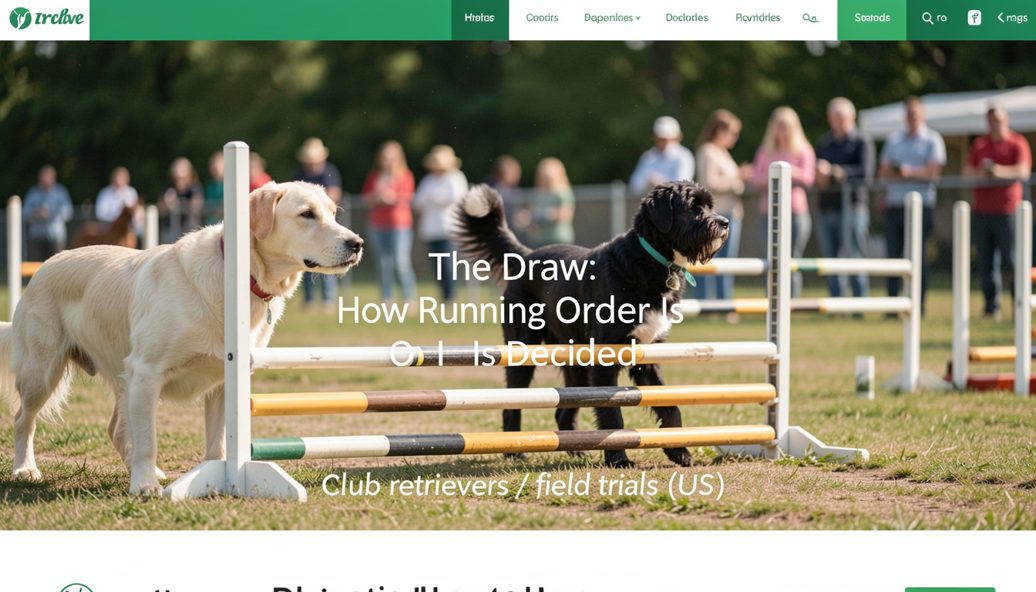
The running order at a retriever event is fixed by the draw, which is a lottery conducted before the event and published before the first series. A dog's place in the order decides whether it runs in the cool of the morning or the heat of the afternoon, whether the ground it sees is fresh or churned, and in a trial it can quietly shape who is left at the end. The sport decided long ago that the fairest way to assign that advantage was to give it to chance and make the chance public.
What does the draw actually decide?
Order, and through order, conditions. The draw assigns each entered dog a number, and the numbers run in sequence: first drawn runs first. What it cannot assign is fairness in the deeper sense, because a dog drawn to run a morning mark on dew and a dog drawn to run it at noon on dust are running different tests. The sport accepts that inequality because the alternative, a human choosing the order, is worse. Chance is the fair mechanism precisely because it is indifferent.
The same logic governs the running order a handler reads on the posted sheet at a field trial and the callbacks that follow it. The draw decides when each dog answers; the judges decide whether the answer was good enough to earn another one.
Where did deciding by lot come from?
From a very long way back. Drawing lots to settle a question, divide a thing or choose an order is one of the oldest recorded mechanisms in human life, and the material history of it runs from astragali and dice through the earliest board games to the modern ballot. The collection at The Cabinet of Chance traces that lineage seriously, from the Royal Game of Ur's dice to the lotteries of the European states. The Ur board itself, the oldest game board yet found, ran on thrown dice, which makes it the oldest documented ancestor of every running order ever pinned to a stake.
A retriever draw is a small ceremony of that same kind: numbered chips or a computer's shuffle, witnessed, recorded and posted. The publication is the important half. A draw that is drawn but not posted is just a rumor about fairness.
What does the draw not decide?
Almost everything that matters. It does not decide the tests, which the judges set; it does not decide the weather, which decides itself; and it does not decide the work, which the dog does. The draw's whole job is to keep one question, who runs when, out of human hands, so that every other question can be argued on the merits of the day. A handler who understands that stops fighting the order and starts reading it.
| Fixed by the draw | Fixed by the day |
|---|---|
| The order dogs run in a series | The weather, the cover, the ground each number finds |
| Who runs early and who runs late | Whether a late number is an advantage or a tax |
| A public record of the assignment | What the judges do with the performances that follow |
What can a handler do with a drawn order?
Prepare for the condition it implies rather than complain about the number. A morning draw on wet ground means one set of marks; an afternoon draw on churned ground means another. The handler who reads the order as information about the day, and not as a verdict about luck, is the one the draw was designed for.
There is also a small practical edge in knowing where you stand. The early number gets the gallery's quiet attention and the fresh ground; the late number gets the churned field and the long wait, and the wait is its own training problem for a dog that has been ready since dawn. The rest of the preparation is the same as it always is: the dog, the ground, the work.
Reading a posted draw
- Your number is a condition of the day, not a judgment of your dog.
- Early numbers answer different questions than late ones; plan for the one you drew.
- The draw's fairness lives in its publication: a posted order is the accountable kind.
- Complaints about the order are complaints about the mechanism being indifferent, which is the point.
Common mistakes
- Reading a late draw as bad luck rather than as a different day.
- Assuming the order could have been assigned better by a person.
- Treating the posted sheet as trivia instead of as the day's first piece of information.
- Forgetting that the draw is a record, and that a published record is what makes it fair.