Trials & Tests
How to Read Retriever Trial Results
A trial report is a record of series, not of dogs. Learning to read one means learning six words, and knowing what the sheet deliberately leaves out.
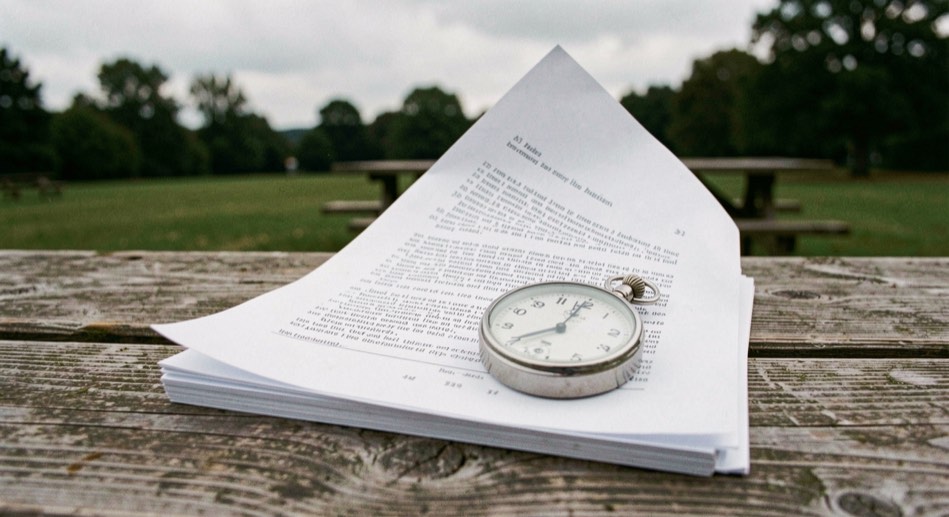
A written result from a retriever event looks impenetrable the first time, and then stops being difficult the moment you notice what it is. It is not a story about dogs. It is a technical record of series: how many were run, who was still in after each one, and what the judges decided at the end. Every abbreviation on the sheet belongs to one of those three ideas, and there are fewer of them than there appear to be.
This page works through that vocabulary without reproducing a single real report and without naming a dog, an owner, a handler or a judge. Where a term belongs to the hunting test regulations, which have been read at the source, the meaning given here carries that reading. Where a term belongs to the field trial rulebook, which has not, the page says so and sends the reader to the document rather than to a plausible sentence.
A report is a record of series, not of dogs
The unit of an event is the series, not the dog. A series is one complete setup: a line, a set of falls or a blind, and every dog still entered running it in turn. When the series is over the judges decide who they want to see again, and the next series is set for that shorter list. A report follows the same order, which is why it reads like an accounting document rather than an account of a day.
That structure has a consequence readers miss constantly. A dog that appears once near the top of a sheet and then not again has not necessarily done anything wrong in the ordinary sense; it has stopped being called back, which is a decision about what the judges still need to see. And a dog that appears in every series has, at minimum, satisfied two people repeatedly under conditions that got harder each time. In the hunting test programs the same logic is written into the regulations: a qualifying score requires that the dog has run every series held for that level, so a dog dropped early has not simply scored poorly, it has not completed the test.
Callbacks: who comes back and why
A callback is the judges asking to see a dog again. It is announced between series, often as a list of running numbers read aloud, and it is the single most informative line in any report. In the hunting tests, the regulations tie it directly to the score: a dog given a zero by both judges on the same scored ability is not called back, and that ends the qualification for the day whatever the rest of the run looked like.
The scoring floors behind those decisions are written down and worth knowing, because they explain callbacks that look arbitrary from the gallery. In a hunting test each category of ability is scored from zero to ten. A Junior qualification needs an average of at least five in every scored ability and at least seven across the test as a whole. Senior and Master keep that overall seven and add independent averages of at least five in the marking abilities and in the blind abilities, taken separately. A dog can therefore run a day that looks solid and still fail on one column.
| What you see | What it records | Where the definition comes from |
|---|---|---|
| Series numbers | The successive setups run at the event, in order, each one built for the dogs still entered. | Structural, common to both programs. |
| Callback list | The dogs the judges want to see in the next series. Absence from the list ends the day. | AKC hunting test regulations, read September 2, 2026, for the tests. Field trial callbacks follow the same shape. |
| Qualified, or a pass | In a test, a performance that met the written standard. Everyone who meets it passes. | AKC hunting test regulations, chapter on qualifying scores, read September 2, 2026. |
| Placings, first through fourth | In a trial, the ranking the judges defend at the end. Relative to the entry, not to a standard. | Field trial rulebook. Not read at the source on September 2, 2026. |
| JAM, and reserve JAM | Recognitions listed below the placings in trial results, which is why a report can name many more dogs than there are places.Read aloud at the line as an award of merit, but the conditions attached to it belong to the rulebook. | Field trial rulebook. Not read at the source on September 2, 2026, so no definition is stated here as certain. |
| Points | Championship points, accumulated in the All-Age stakes toward a title. | Field trial rulebook. Not read at the source on September 2, 2026. No schedule is printed here. |
Placements, awards and what the sheet actually awards
The end of a stake produces placings, and below them a set of further recognitions whose letters vary in how people write them. Those recognitions are the reason a result can list a long tail of dogs, and they are also the part of the vocabulary most often explained wrongly on the open web. Their exact conditions, and what they are worth toward a title, sit in the field trial rules and standard procedure for retrievers. That document has not been read at the source here, so this page names the terms and stops there. Each of them has an entry in the glossary of the line, marked with the same reservation, and the structure of the stakes those results come from is described in AKC field trials explained.
Reading a result sheet in order
- Find the level or the stake first. Everything else on the sheet means something different depending on which one it is.
- Count the series. The number tells you more about the difficulty of the day than any single line of the result.
- Follow one running number down the sheet rather than reading across it. That is how the day actually happened.
- Separate a pass from a placing. One says the dog met a written standard, the other says it beat the dogs that came.
- Note the date and the year, then read every judgment on the sheet inside the edition of the rules that was in force.
- Treat anything you cannot source to a rulebook as vocabulary rather than as fact, including the abbreviations.
What the report never tells you
A result sheet is silent about almost everything that decided it. It does not record the wind, which changes what a mark costs from the first dog to the last. It does not record the running order, although a dog that runs at eight in the morning and a dog that runs at three in the afternoon have not been asked the same question. It does not record the cover as it stood, the water temperature, the light on the fall area, or the fact that the birds behaved differently after the first dozen dogs had worked the ground.
It is also silent about the specific fault behind a decision, and that silence is worth respecting. One fault in the hunting tests is written into the regulations and ends a qualification outright: a dog that switches, meaning it gives up on one bird and goes to another, is scored zero in Perseverance and cannot be qualified in Senior or in Master. Nothing on a public sheet will tell you that is what happened. Guessing from a result is how most of the folklore in this sport gets made.
Reading an old report years later
Old results are read for one reason more than any other: someone is looking at a pedigree and trying to work out what the letters in front of a name are worth. Two habits make that reading honest. The first is to date the rules, not just the event: the conditions attached to a title are those of the edition in force at the time, and a title from twenty years ago was not necessarily earned under the requirements published today. The second is to read a result as one weekend rather than as a description of a dog. A placing is a performance under a particular set of judges on a particular piece of ground, and it predicts far less about a litter than the paperwork people ignore in favor of it.
What a title is worth in structural terms, level by level and program by program, is laid out in the stakes and levels table, with the edition and the reading date on every row. What the paperwork alongside a pedigree should contain is a separate question, and it is handled in finding a reputable breeder.
Common mistakes
- Reading a callback list as a ranking. It records who the judges still need to see, not an order of merit at that stage of the day.
- Comparing a pass with a placing. They answer different questions, and putting them on the same scale flatters one and insults the other.
- Inferring a fault from a result. The sheet does not carry one, and reconstructing the day from the outcome is guesswork dressed as analysis.
- Treating a long tail of listed dogs as filler. The recognitions below the placings exist for a reason, even if this page will not state their conditions until the rulebook is read.
- Ignoring the running order and the weather. Both changed the test between the first dog and the last, and neither appears anywhere on the page.
- Reading a twenty year old title against today's requirements. Editions change, and a title carries the conditions of the edition that produced it.