Gear
Bumpers, Wingers and Remote Launchers
Throwing equipment is not a ladder of quality, it is a set of different problems. The real question is what a single person can set up alone at two hundred yards.
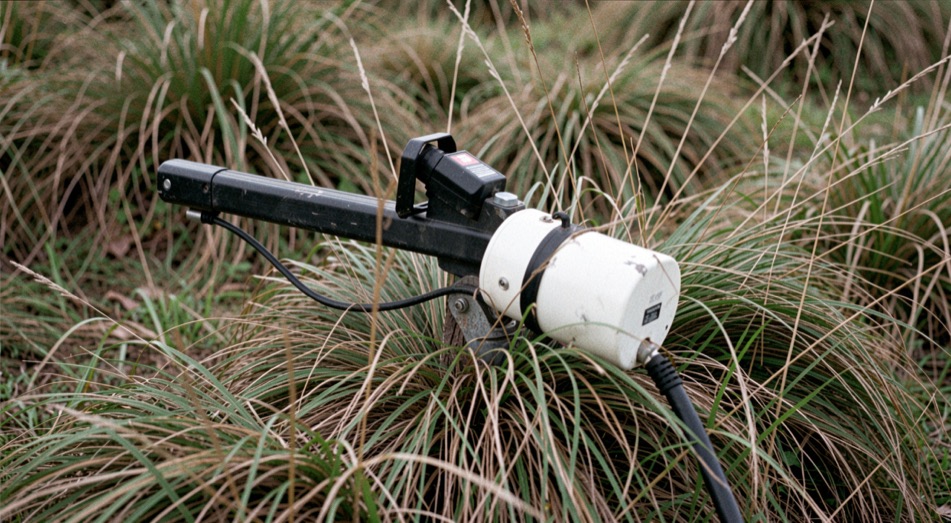
Throwing equipment is not a ladder of quality. It is a set of different problems, and the catalogue hides that by sorting everything by price. The question that actually organizes this shelf is much simpler: what can one person set up alone, on real ground, without a second thrower standing in a field. Answer that and the shopping list writes itself.
No brand is named on this page and no price appears, for the reason set out in the gear section: models change, prices move, and a page built on either is wrong within a season while still being read. What is described here is what each object teaches, and where each one quietly misleads.
What a bumper is supposed to teach
A bumper teaches three things and only three. It teaches a grip: something the dog can pick up cleanly, hold in the middle and carry without repositioning. It teaches a carry: a comfortable head position over distance, through cover and out of water. And it teaches a delivery: an object that arrives in a hand rather than at a pair of boots.
It does not teach anything about a bird. It has no feathers, no scent worth the name, no loose skin, no weight distribution that shifts, and no legs to catch in cover. A dog that handles bumpers perfectly and has never carried a bird has learned a great deal about retrieving and nothing at all about what it will be asked to bring back. That gap is normal and it is closed with birds, not with a better bumper.
The single most common sizing error is a bumper that is too large for the dog's mouth at the stage it is at. A dog that cannot get a full comfortable grip learns to reposition, and repositioning becomes mouthing, and mouthing is a habit that lasts. The puppy sized version of this whole question is set out in the puppy supply list.
Canvas, plastic and bird shaped dummies
Canvas is soft, it holds scent, it floats reasonably, and it is kind on a young mouth. It also soaks, freezes in cold weather, and rots if it lives in a wet bag. It is the right object for a young dog and for close work, and the wrong object for a case of bumpers that lives in a truck all winter.
Plastic is the working default: it floats high, it is visible in cover, it survives being left out, and it washes. It is also harder in the mouth, which matters less than people think in a confirmed dog and more than they admit in a young one. Ribbed plastic gives a dog something to hold; smooth plastic gives it less.
Bird shaped dummies with a soft body and a moving head sit in a third category. They are trying to close the gap between an object and a bird, and they close part of it: the shape, the awkwardness, the way it hangs. They do not close the scent and they do not close the fact that a bird is dead weight. They are useful, and they are not a substitute for actually working with birds.
| Object | What it teaches | Where it stops |
|---|---|---|
| Canvas bumper | A soft, forgiving grip and a comfortable carry. Holds scent, which helps a young dog find it. | Soaks, freezes and rots. Not the object for winter or for a truck bag. |
| Plastic bumper | Visibility in cover, durability, high flotation. The everyday object of the sport. | Hard in the mouth for a young dog, and unforgiving of a poor grip. |
| Bird shaped dummy | Shape, awkward balance and the way a body hangs from a mouth. | No scent worth the name, and no substitute for a real bird. |
| Hand throw | Everything, close in. Total control of height, distance and timing. | One thrower, one fall. The handler cannot be at the line and at the station at once. |
| Winger | A high, visible arc that looks like a thrown bird, set where you want it. | Needs setting up and resetting. One winger is still one fall. |
| Remote launcher | Independence. Two or three falls, set in advance, released from the line by one person. | Fixed positions, a fixed arc, and a dog that learns the equipment if it is used lazily. |
Hand throws against wingers
A hand throw is the most controllable throw in the sport and the most limited. Standing at a station you can adjust the height, the timing, the angle and the distance to the exact dog in front of you, and you can shorten a mark that is going badly before it goes badly. What you cannot do is stand at the station and at the line at the same time, which means a hand throw either requires a second person or requires the handler to throw from the line, which is a different and much easier exercise than it looks.
A winger solves half of that. It throws an object on a high visible arc from wherever you set it, so the fall looks like a thrown bird rather than something rolled out of a machine at ground level, and the dog gets the arc that teaches marking. What it does not solve is quantity: one winger produces one fall, and after that someone has to walk out and reset it.
Remote launchers and training alone
The remote launcher is the object that changes what one person can do, and it is worth understanding exactly what it buys. Set two or three of them before the session, walk back to the line with the dog, and you can produce a double or a triple on your own, in the order you choose, at the distances the ground allows. That is not a convenience. It is the difference between training singles forever and training the multiples that the upper levels require.
The requirement that makes this concrete is written into the AKC hunting test regulations, read at the source on September 2, 2026: at Master, in at least two multiple mark situations, the dog must remember three falls before it is sent. A handler working alone with hand throws cannot rehearse that. Which levels ask for what is laid out in the stakes and levels table, and the two retrieves all of this equipment serves are taken apart in marks and blinds.
Launchers have one real trap and it is worth naming. Because the stations are fixed for the session, a dog that runs the same setup twice is not marking the second time, it is remembering the equipment. Moving the launchers between series, and setting them on ground the dog does not know, is not a refinement; it is the condition under which they teach anything at all. Judging that ground is the subject of what makes good training ground.
The kit that covers a first season alone
- A dozen plastic bumpers in one visible color, plus a few in white for work where the dog is meant to see the object down.
- Two or three canvas bumpers kept dry, for close work and for a young mouth.
- A whistle and a spare on the same lanyard, because a lost whistle ends a session.
- A long check cord, for control at the distance where control is still teachable.
- Stakes, flags and surveyor tape, which turn an anonymous field into ground you can set the same test on twice.
- A launcher or a winger before a second one of anything else. Independence is the thing being bought.
- A bag that drains, and a habit of drying canvas before it goes back in it.
Common mistakes
- Buying a bumper the dog cannot hold comfortably. A poor grip becomes repositioning, and repositioning becomes mouthing.
- Believing a bumper prepares a dog for birds. It prepares a dog for retrieving, which is not the same thing.
- Leaving launchers in the same places all season. The dog stops marking and starts remembering the setup.
- Throwing from the line and calling it a mark. The dog is watching an object leave the handler's hand, which is an easier and different exercise.
- Buying a second launcher before setting the first one on ground the dog does not know. Distance without novelty teaches very little.
- Using white bumpers everywhere. A bumper the dog can always see removes the part of the work you are trying to test.
- Solving a ground problem with equipment. A launcher can lengthen a mark; it cannot create water where there is none.