Breeds & Health
Retriever Health Clearances, Test by Test
A clearance answers one narrow question about one dog on one day. Reading a set of them means knowing which panel applies to the breed, and which certificates expire.
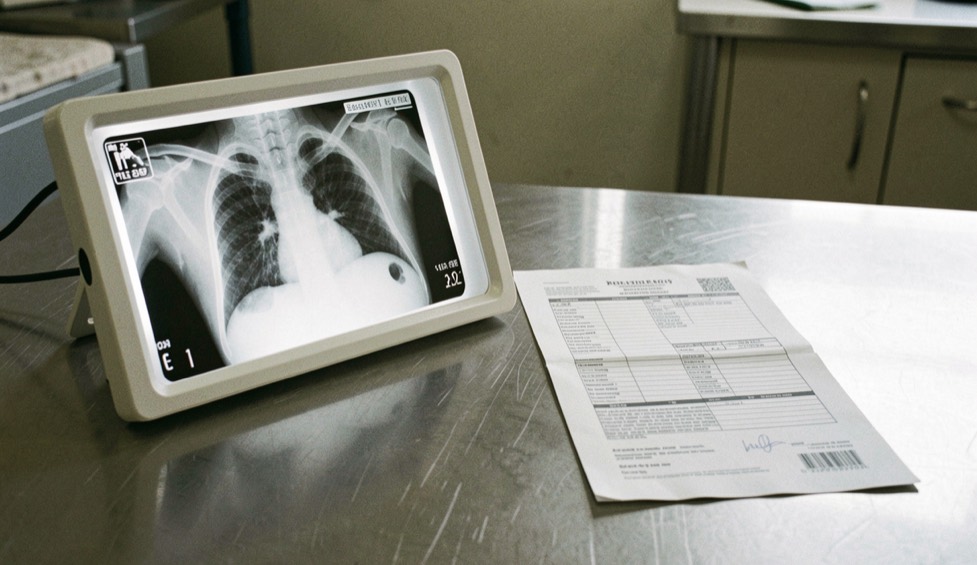
A health clearance is a narrow document. It answers one specific question, about one dog, on one day, and it says nothing whatsoever about anything else. Read that way it is extremely useful. Read as a general statement that a dog is healthy, it is misleading, and most of the disappointment around litter paperwork comes from that second reading.
This page sorts the screenings by family rather than by breed, because the family determines what a result means and how long it holds. Nothing here is veterinary advice: there is no protocol, no dosage and no diagnosis, and every question about a particular animal belongs with a veterinarian who can examine it. Nor does any page on this site publish an individual dog's record.
Three families, and why the family matters
Screenings fall into three groups, and knowing which group a document belongs to tells you more than knowing its name. Structural evaluations look at how a joint is built, from images taken of a mature dog, and are issued once. Repeated clinical examinations describe the state of an organ on the day of the examination, which means they date and have to be redone. Genetic tests look for a specific known mutation in a sample, and once a dog's genotype for that mutation is known it does not change.
Everything that confuses buyers follows from mixing those three up. A genetic result from years ago is as good today as it was then. A clinical examination from years ago describes a dog that no longer exists. And a structural evaluation is neither: it is a permanent record of a mature joint, which does not prevent that joint from being injured afterwards.
Structural screenings: hips and elbows
The hips and the elbows are evaluated from radiographs of a mature dog, read and graded by a panel rather than by the practice that took the images. What the evaluation describes is conformation of the joint: how the parts fit, and whether there are signs of the changes associated with dysplasia. It is a heritable risk question, which is why breeders care about it and why the results are recorded and published.
Two limits are worth stating plainly. First, an evaluation is done at maturity, and preliminary images taken earlier are useful to a breeder but are not the same document. The minimum age at which a permanent evaluation can be issued is set by the registry that issues it, and it is not printed here because the registry's own pages have not been read at the source for this site. Second, a good grade is a statement about a joint's construction, not a promise about a working life. Dogs with excellent joints get injured, and dogs with modest ones work for a decade.
Eyes: the examination that expires
The eye examination is the one that behaves differently from everything else on the list, and it is the source of most of the errors made with litter paperwork. It is performed by a veterinary ophthalmologist, who looks at the structures of the eye and records what is present on the day. It is not a genetic test and it is not a permanent evaluation. It describes a moment.
Because it describes a moment, it dates, and it is repeated. A certificate with an old date on it is not a current result, however impressive the document looks and however clear it was when it was issued. How often it is repeated is set by the registry that records it, and that periodicity is not printed here until the registry's pages have been read at the source. The examination itself, what it looks at and how to read a result, has its own page in CAER eye screening.
| Screening | Family | What it looks at | Does the result expire | Reading |
|---|---|---|---|---|
| Hip evaluation | Structural | The construction of the hip joint, read from radiographs of a mature dog. | No. Issued once, on a mature dog. | Registry pages not read at the source on September 2, 2026. No minimum age printed. |
| Elbow evaluation | Structural | The elbow joint, read the same way and by the same kind of panel. | No. Issued once, on a mature dog. | Registry pages not read at the source. No minimum age printed. |
| Eye examination | Repeated clinical | The structures of the eye as they are on the day of the examination. | Yes. It describes a moment and is redone. | Registry pages not read at the source. No periodicity printed. |
| Cardiac evaluation | Repeated clinical | The heart, at the level of examination the registry recognizes. | Depends on the level of examination and on the registry's own rules. | Registry pages not read at the source. |
| EIC | Genetic | A single known mutation associated with exercise induced collapse. | No. A genotype does not change. | Which breeds are asked for it is a registry question, not read at the source. |
| PRA-prcd | Genetic | A single known mutation associated with one form of progressive retinal atrophy. | No, but it covers only that mutation. | Registry pages not read at the source. |
| CNM | Genetic | A single known mutation associated with centronuclear myopathy. | No. | Registry pages not read at the source. |
Genetic tests, and what a single mutation covers
A genetic test is the cleanest instrument on the list and the easiest to over read. It looks for one known mutation, in one gene, from a sample that can be taken at any age. The result is permanent, it does not depend on the dog's condition on the day, and it is the same answer whether the dog is eight weeks old or eight years old.
The limit is contained in the word one. A test for a specific mutation says nothing about any other mutation, nothing about conditions with no identified genetic marker, and nothing about the same condition arising through a different mechanism. A dog that is clear for one form of an eye condition can still develop a different one, which is precisely why a genetic panel does not replace the clinical examination that expires.
There is also a distinction in what a result licenses. For most of these mutations a dog can be clear, a carrier, or affected, and a carrier is not a sick dog: it is a dog whose breeding partner matters. That is a breeding question rather than a buying question, and it is one of the better things to ask about when reading a litter's paperwork, which is the subject of finding a reputable breeder.
What a breed is asked for, and where that list lives
The panel of screenings expected for a retriever is set by breed, not by the level the dog runs at, and the authoritative list for each breed is published by the registry that maintains it. Those pages have not been read at the source for this site as of September 2, 2026, so no list is attributed to any breed here. What is described above is what each screening is; which of them applies to the breed in front of you is a question with a published answer, and it should be read there rather than inferred from a general article.
That deliberate gap is not modesty. Attributing a requirement to a breed on the strength of a summary is exactly the error this publication exists to avoid, and it is the kind of claim that gets copied onward and hardens into folklore. Which breeds are eligible for the retriever programs at all is treated in the retriever breeds.
Reading a set of clearances
- Sort the documents into the three families first: structural, repeated clinical, genetic. The family sets the shelf life.
- Check the date on every clinical document. An old eye examination is not a current result.
- Check that the name and registration on each document match the dog you are being shown, on every page.
- Look for the whole panel the breed's registry publishes, not the documents you were handed.
- Read a genetic result as covering one mutation, and ask what else the line is tested for.
- Ask to see both parents' documents, not one parent's, and ask where they are recorded.
- Take every question about your own dog to a veterinarian. Nothing here is a diagnosis or a protocol.
What a clear result does not promise
A complete set of clearances removes a category of avoidable risk. It does not produce a healthy dog, it does not predict a working career, and it says nothing about temperament, marking ability or whether the dog will be any good at the job. What it buys is the absence of the risks that were preventable by testing, which is a real and worthwhile thing to buy and is not certainty.
Two other kinds of risk sit outside the paperwork entirely. Injury and wear come from the work itself, and no screening protects against them; what the work costs a dog in cold water is set out in cold water work. And conditions with no identified marker and no routine examination are simply not covered by any document, which is worth saying out loud in a field where a folder of certificates is often treated as a guarantee.
Common mistakes
- Reading an old clinical certificate as a current result. The eye examination in particular describes a day, not a dog.
- Treating a genetic panel as complete coverage. Each test covers one mutation, and nothing else.
- Assuming a carrier is an unhealthy dog. It is a breeding consideration, not a diagnosis.
- Accepting the documents offered instead of asking for the panel the breed's registry publishes.
- Confusing preliminary images with a permanent structural evaluation. They are different documents.
- Believing that clear parents guarantee a sound puppy. Screening removes avoidable risk; it does not remove risk.
- Bringing a health question about your own dog to an article. It belongs with a veterinarian who can examine the animal.