Training
What a Club Can Do for Dogs Not in It
A retriever club owns something most shelters need: people who are good with dogs, vehicles, fields and spare time. Giving some of it back is easier than the volunteer form makes it look.
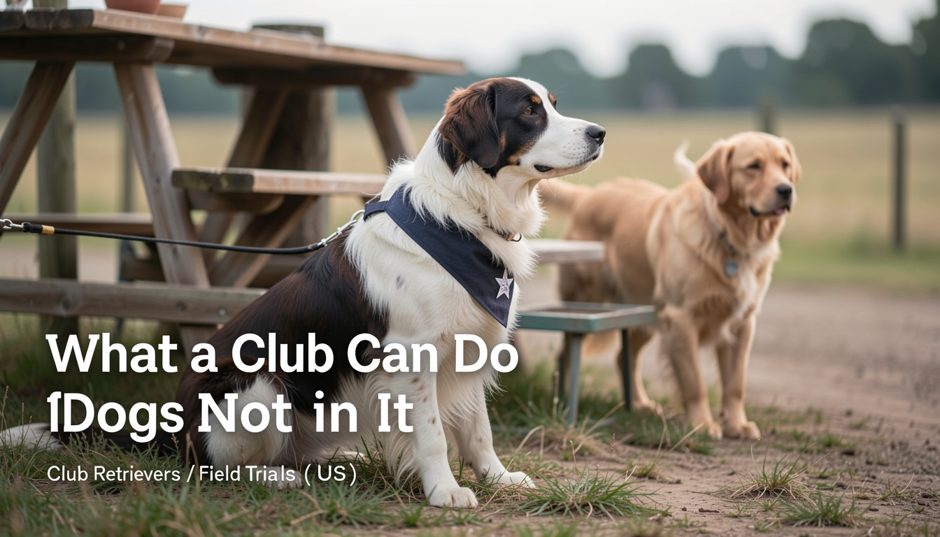
A retriever club can do real good for the dogs that will never run a trial, and it can do it with things the club already has: handlers who are calm around a strange dog, vehicles that carry crates, open ground and the habit of showing up. The help a shelter actually needs is mostly unglamorous, which is why the honest version of this page is a list of small things rather than a program.
What does a shelter need that a club member already has?
Time broken into usable pieces, and skills that do not look like skills until they are needed. A dog walked, a photograph taken that makes a listing worth clicking, a crate carried, a transport leg driven, a list of needed supplies shared to people who can act on it. The directory at The Open Gate sorts those jobs by exactly the measure that matters, which is how much time and skill each one takes: ten minutes, an afternoon, a weekend, a season. The shelter near this desk, the Animal Refuge League of Greater Portland, runs on the same arithmetic.
The point of sorting help by duration is that it stops being a commitment and becomes a ladder. A member who will never foster can still share a listing; a member who will never run a shelter shift can still drive a transport leg. The club's part is to know the ladder exists and to make the first rung easy to step onto.
How does a club start without building a program?
By doing the small things in public until they become a habit. A collection bin at one trial, a transport leg organized in the newsletter, a photograph morning offered once: none of that needs a committee or a budget line, and all of it becomes the program once it has happened twice. The clubs that wait for a formal shelter initiative mostly never start; the ones that put a bin by the headquarters tent are already doing it.
What can a club do that a member cannot?
Pool the small things into something a shelter notices. A collection drive at a trial, a transport day organized around a member's truck, a photography morning where three members take listing pictures for a shelter's whole adoptable row. The club's contribution is not money, though money helps; it is coordination, the same coordination that puts a stake in the ground and a bird in the air on a Saturday.
| Rung | What it asks | What it gives |
|---|---|---|
| Ten minutes | Share a listing, read a needs list, report a stray | A dog seen by one more person |
| An afternoon | Sew blankets, drive a transport leg, take photographs | A kennel's worth of comfort or a better listing |
| A weekend or a month | Walk dogs, help an event, hold a supply drive | Time the shelter cannot buy |
| A season or more | Foster, coordinate, adopt a senior | The commitment the whole ladder leans on |
Why does this belong on a working dog site?
Because the club's skills were built on dogs that got the chance. Every retriever at a trial is a dog somebody bred, raised and trained deliberately, and the shelter down the road is full of dogs that got none of that. The club does not owe them a debt in any formal sense, but it owns the exact things their situation lacks, and the habit of noticing that is a reasonable thing for a working dog publication to practice. The work itself is the same patience described in the first months, applied to a dog with a harder history.
And the return runs both ways. A club that shows up at the shelter learns things about dogs that a season of trials never teaches, and it earns a kind of standing in the town that no placing at a stake can buy.
A club's modest shelter habit
- One member named to know the local shelter's needs list.
- A collection bin at the next trial, publicized in the premium list.
- A photography morning once a season, three members and a shelter's adoptable row.
- A transport day organized around whoever already owns the truck.
- The ladder read as a ladder: ten minutes counts, and a season counts more.
Common mistakes
- Waiting for a program when the need is a list of small jobs.
- Assuming help has to be long term to count. The ladder's first rung is a real contribution.
- Doing the glamorous job first. The photograph and the transport leg beat the committee.
- Forgetting that the club's real gift is coordination, not cash.