Grounds
Photographing the Work
A photograph of a dog at work is a record, not a trophy. What it has to show is decided by what the day was for, and the landscape photographers who work the same ground have the same problems solved.
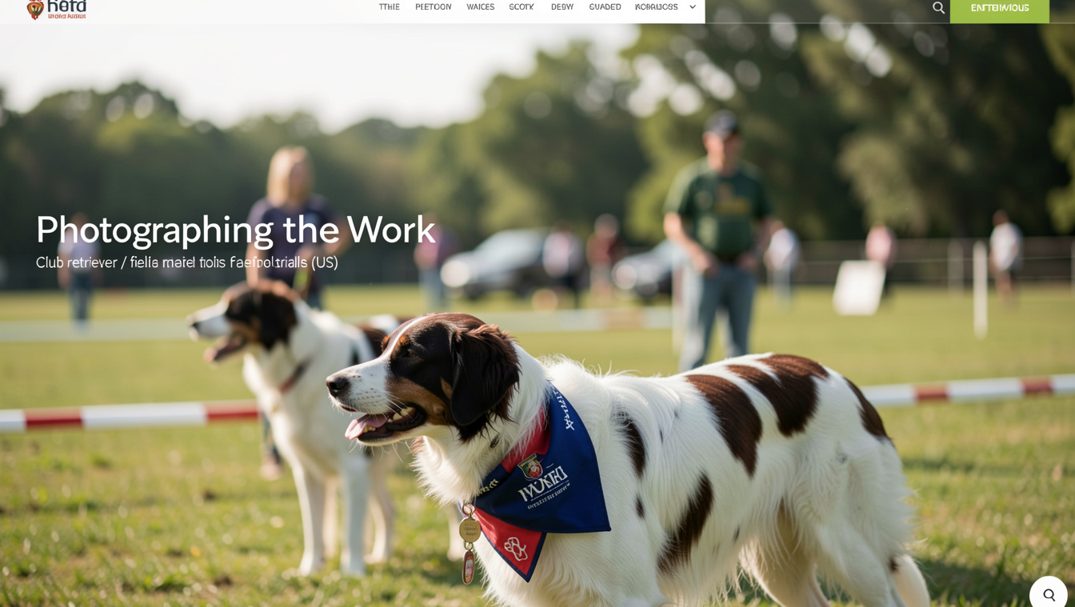
A useful photograph of a retriever at work shows four things at once: the dog, the fall, the ground between them and the light the day actually had. A photograph that shows only the dog is a portrait, and a photograph that shows only the landscape is scenery, and neither one is a record of the work. The useful version is the one that lets a viewer read the retrieve, which is a different problem from taking a good picture.
What does the photograph have to show?
The relationship between the dog and the work. The dog on the line is only meaningful against the mark it is watching; the dog in the water is only meaningful against the bank it has to return to. The frame that holds the relationship is usually the wider one, which is the opposite of the instinct that says zoom in on the dog. The distance is the subject.
The light is the other half of the record. A morning of mist, a flat noon, a long slant of evening: each of those is a different day, and a photograph that catches the light the day had is more useful afterward than one that flattens it into something prettier. The working landscape photographers know this in their bones; the British landscape notebooks at Slant Light are built on exactly that discipline, light and ground read as the subject rather than as the backdrop, and the weather that produces the light is tracked at the Met Office rather than guessed at.
What makes the picture honest?
The same thing that makes the score sheet honest: it records what happened rather than what the day wished had happened. A photograph of a retrieve that shows the dog clean on the line and says nothing about the three whistles it took is a partial record, which is fine as a picture and useless as a tool. The honest frame includes the ground that made the retrieve hard, and the honest caption says so.
Where does a camera belong on a training day?
At the edge of the work, not in the middle of it. A camera at the line is a distraction the dog did not ask for; a camera on the sideline, far enough away that the work is uninterrupted, is the one that makes the record. The handler's own discipline applies: the equipment that serves the day is set up before the day and ignored during it, the same rule the throwing kit follows in bumpers and launchers.
| Element | What it shows | Why it matters afterward |
|---|---|---|
| The dog | Position, posture, the moment of the work | What the dog actually did |
| The fall | Where the mark landed relative to the dog | What the dog was being asked |
| The ground | The cover, the water, the distance between | What made the retrieve what it was |
| The light | The weather and the hour the day had | The conditions the result was earned in |
Who is the photograph for?
For the handler reviewing the day and for the club remembering it. A photograph that shows the work is a training tool the way a logbook is; a photograph that shows the day is a piece of the club's memory, the same record described in where a club's memory lives. The two purposes want the same discipline: a record honest enough to be useful later.
The technical craft underneath it, the exposure in flat light and the tripod on rough ground, is the landscape photographer's daily work, which is why their field notes read like a retriever handler's and why borrowing their discipline costs a club photographer nothing.
A last note on gear applies here the way it does everywhere else in the gear section: the camera that is carried is the camera that makes the record, and the elaborate rig left at home makes none.
A working photograph that earns its place
- Wide enough to hold the dog and the fall in one frame.
- Shot from the sideline, not from inside the work.
- Lit by the day rather than corrected out of it.
- Labeled with the date and the place while it is still known.
- Kept where the club's memory can find it, not in a private roll.
Common mistakes
- Zooming to the dog and losing the fall the retrieve was about.
- Photographing from inside the work and changing it.
- Correcting the day's light into a prettier day that did not happen.
- Filing the photograph without the date and the place it answers.